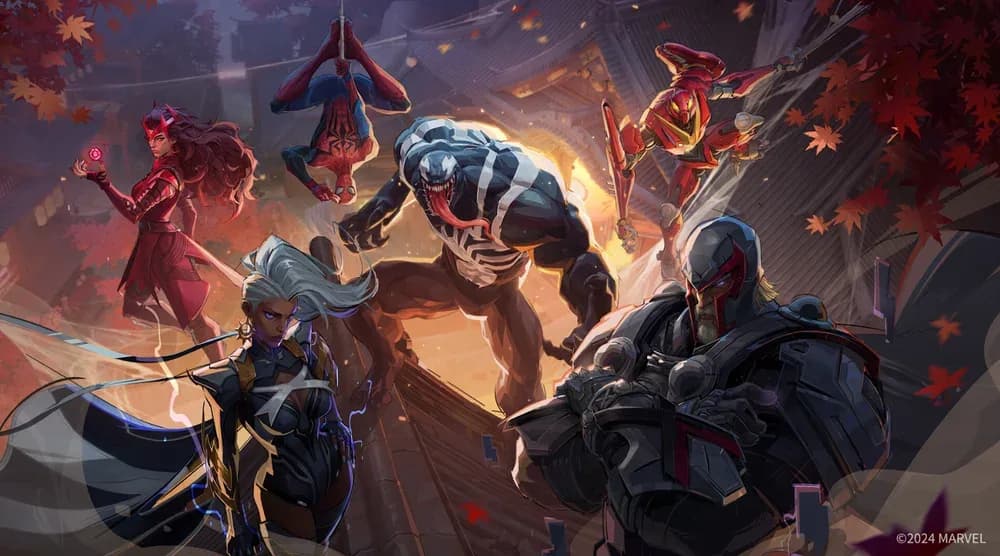
Marvel Rivals is a hero shooter, which means individual mechanics matter, but team composition, ultimate timing, and positioning matter more. A coordinated team of average aimers will beat a team of strong aimers who all play selfishly. Climbing means understanding your role and playing with your team, not around them.
This guide covers the pillars of improving in Marvel Rivals: roles and composition, ultimate economy, positioning and peeling, and reviewing your matches to see what your team needed from you.
Understand your role and the comp
Every match starts with composition. A team with no healer or no frontline will lose to a balanced team almost every time. Before you lock a hero, look at what your team needs, not just what you enjoy. Filling the missing role is often worth more than one-tricking your favorite.
Within your role, play to its job. Frontline heroes create space and absorb damage. Damage heroes punish the space the frontline creates. Support heroes keep the team alive and enable big plays. Knowing your job each fight is half of winning it.
Ultimate economy
Ultimates decide team fights, and how you trade them decides matches. A wasted ultimate, used when no one is in range or right after the enemy already retreated, can lose the next three fights. Track enemy ultimates as well as your own, and try to win the trade: bait theirs, then commit yours when they have nothing to answer.
Coordinating ultimates with your team is the single biggest swing in Marvel Rivals. Two ultimates used together at the right moment can wipe a team, while the same two used one at a time accomplish nothing.
Positioning and peeling
Where you stand decides whether you are useful. Damage heroes who push too far die before they do damage. Supports who stand in the open get dived and deleted. Hold positions where you can contribute without being the easiest target, and peel for your teammates, turning to protect a support being dived rather than chasing a kill.
Common mistakes that cost you games
- Locking a hero that leaves the team with no healer or frontline.
- Using ultimates alone instead of coordinating them with the team.
- Overextending as a damage or support hero and dying first.
- Ignoring a diving enemy on your support when you could peel.
- Playing every fight the same way regardless of comp.
Drills to fix it this week
- Comp check: Before every match, pause and pick the hero your team is missing, not just your main.
- Ult tracking: For one game, call out when you and enemies have ultimates ready. Notice how fights change.
- Fight review: Review one lost team fight and find whether comp, ult timing, or positioning lost it.
Turn this guide into a personal plan
Reading about positioning and game sense is the easy part. Seeing where you actually break these rules in your own matches is what changes your rank. GameSense AI watches a clip of your Marvel Rivals gameplay and scores your positioning, aim, game sense, and timing, then gives you a ranked top-three list of what to fix first. It is the fastest way to turn this guide into a plan built around your own play. Learn more about AI gaming coaching or compare it to hiring a human coach.
Frequently asked questions
How do I climb in Marvel Rivals?
Play a balanced composition, coordinate ultimates with your team, and hold positions where you contribute without being the first to die. Team play and ultimate trades decide matches far more than individual aim, especially as you climb.
Should I one-trick a hero in Marvel Rivals?
One-tricking limits you because team composition matters so much. Learn at least one strong hero in each role so you can fill what your team needs. Flexibility wins more games than mastery of a single pick.